India (English)


August 14, 2024
How Does Indoor Air Quality Affect Kids?
Ensuring the well-being of our children is a priority for every parent and caregiver. Every aspect of their environment, including the air they breathe, plays a crucial role in their health and development. In recent years, indoor air quality (IAQ) has emerged as a significant concern, with studies revealing its profound impact on children’s health. In this article, we’ll delve into the importance of indoor air quality for children and explore actionable steps to maintain a healthy indoor environment.
The Importance of IAQ for Children’s Health
Although this article discusses the importance of clean air indoors, it is important to note that indoor and outdoor air pollution can’t always be fully separated. Depending on the ventilation system available to you, the region where you live, and other aspects, ambient or outdoor pollution might be more or less of a problem when trying to keep the indoor air quality healthy for your family.
What is clear, though, is that air quality is important for kids’ health, development, and well-being. Air pollution, both indoors and outside, is estimated to account for almost 1 in 10 deaths for children under five years old, reports UNICEF. Studies have shown that nearly 1 in 13 school-aged children has asthma, a condition often exacerbated by indoor environmental triggers like dust mites, pests, and mold.
Exposure to air pollution during childhood can have lasting consequences, increasing the risk of heart disease and other ailments later in life, Stanford University research shows. According to the U.S. Environmental Protection Agency (EPA), poor indoor air quality not only leads to short-term discomforts like coughing and headaches but also poses long-term risks such as respiratory problems, learning difficulty, and cognitive impairments. There is even evidence that some types of pollution, like PM2.5, carbon monoxide, and ozone, can be linked to genetic mutations that can be passed onto the next generations.
With their developing bodies and immune systems, children face heightened vulnerability to pollutants. According to the World Health Organization (WHO), their ongoing growth means that pollution can disrupt crucial biological processes. Younger children breathe faster and inhale more air relative to their body weight, primarily through mouth breathing, as highlighted by UNICEF. Their proximity to ground level exposes them to higher concentrations of certain pollutants. Their bodies also possess less efficient mechanisms for metabolizing, detoxifying, and eliminating these toxins. Given these factors, it’s imperative to prioritize safeguarding children against the harmful effects of air pollution.
Which Air Pollutants Affect Kids?
Children are especially susceptible to indoor air pollutants. According to the European Environment Agency (EEA), these pollutants can originate from various sources:
- Building materials and furnishings can release toxic chemicals, mineral fibers, and legacy-asbestos still lingering in buildings.
- Natural pollutants like radon can accumulate in poorly ventilated areas.
- Outdoor pollutants can infiltrate indoor spaces, adding to indoor air pollution.
- Household activities such as smoking, burning candles, and accumulating dust can contribute to indoor air pollution harmful to kids.
Two pollutants of particular concern are mold and certain toxic chemicals. Mold can increase the risk of asthma, allergic rhinitis, and respiratory infections in children. Chemicals such as formaldehyde, volatile organic compounds (VOCs), flame retardants, and per-and polyfluoroalkyl substances (PFAS) are often found at higher concentrations indoors.
Second-hand tobacco smoke is another concern. There is no safe level of its exposure, and it poses a significant risk to children before and after birth.
It’s worth noting that air pollution is a global issue with significant inequalities. In low-and middle-income countries, the most significant driver of infant deaths from air pollution is indoor air pollution, often produced through cooking using solid fuels. This accounts for almost two-thirds of neonatal deaths worldwide. These statistics underscore the urgent need to address air pollution for children globally.
How to Ensure Healthy Indoor Air Quality for Kids?
Maintaining healthy IAQ requires a concerted effort from caregivers and communities. Creating a healthy indoor environment is essential for your child’s growth and well-being. Here are some steps you can take:
- Avoid toxic fumes and aerosols: Avoid smoking indoors or near children and pregnant women and always cook in well-ventilated areas. If you have to use candles or air fresheners or scents, think about healthier options to avoid adding toxic chemicals to the air, suggests WHO.
- Minimize exposure to traffic pollution: take quieter streets with less traffic, step back from the road if you see a heavily polluting vehicle approaching, and consider carrying a baby or young child on a busy street so they are not at the same height as exhaust emissions.
- Keep your children healthy: ensure they are up to date with their immunizations, have healthy diets, and plenty of opportunities to be physically active.
- Monitor outdoor air pollution: follow the air pollution levels regularly and take protective measures (stay indoors or avoid opening the windows) if pollution reaches unhealthy levels. We have offered some helpful forecast sites in a previous blog post.
- Ensure regular HVAC maintenance. If a building does not have a working HVAC system, use a portable air cleaner with a filter to remove harmful particles in the air and avoid ionizers, the U.S. Department of Health & Human Services suggests.
- Avoid safety hazards when focusing on IAQ: for example, windows that children can reach should be less than 4 inches open or have a properly installed window guard. Place fans so kids can’t knock them over, touch the blades, or trip over their cords.
- Educate yourself and raise awareness: see if there’s a way to reduce air pollution around schools and work with healthcare providers, community leaders, and relevant authorities to promote policies that reduce air pollution and protect child health, suggests WHO and EEA.You can involve children in this process too.
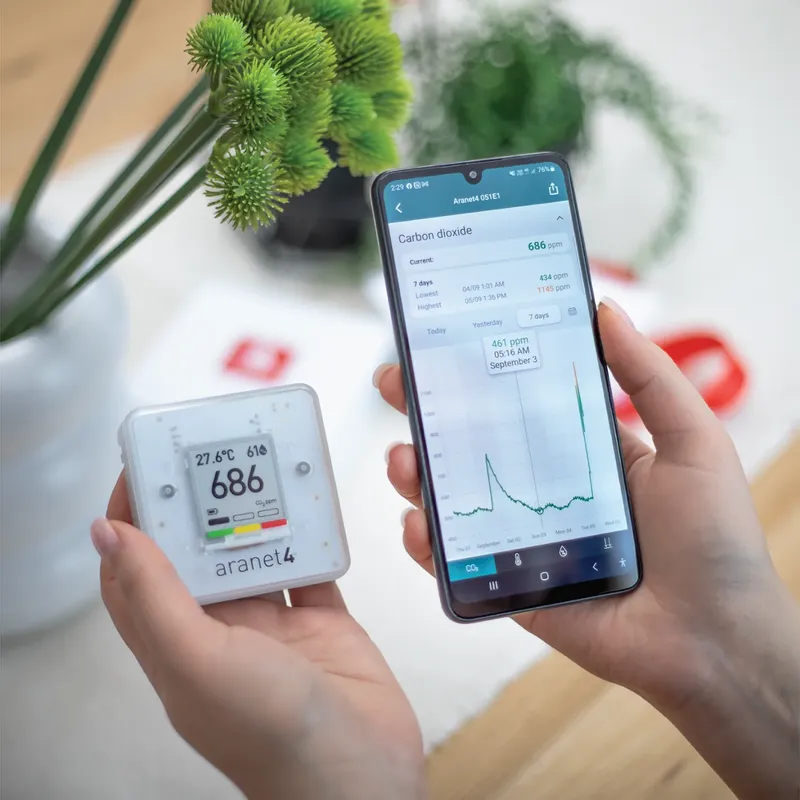
- Measure indoor air quality: devices like the Aranet4 HOME CO2 monitor will give you a gist of the IAQ and alert you when more airflow is needed. Our customers even give their IAQ monitors to kids to see what the IAQ is like at school, in public transport, and after-school activities.
The well-being of our children depends on the quality of the environments in which they live and grow. Indoor air quality plays a pivotal role in their health and development, with pollutants posing significant risks on all fronts. From addressing sources of indoor air pollution to advocating for policies that protect children’s health on a global scale, it’s clear that we need to take action to ensure that every child has access to clean and healthy air. By taking actionable steps to maintain a healthy IAQ, we can create safer and more nurturing environments for our children to thrive in, safeguarding their future health and vitality. Let’s work together to prioritize future generations' well-being, starting with the air they breathe.