India (English)

November 06, 2024
Why Radon Requires a Special Sensor: Radon and Radiation Explained
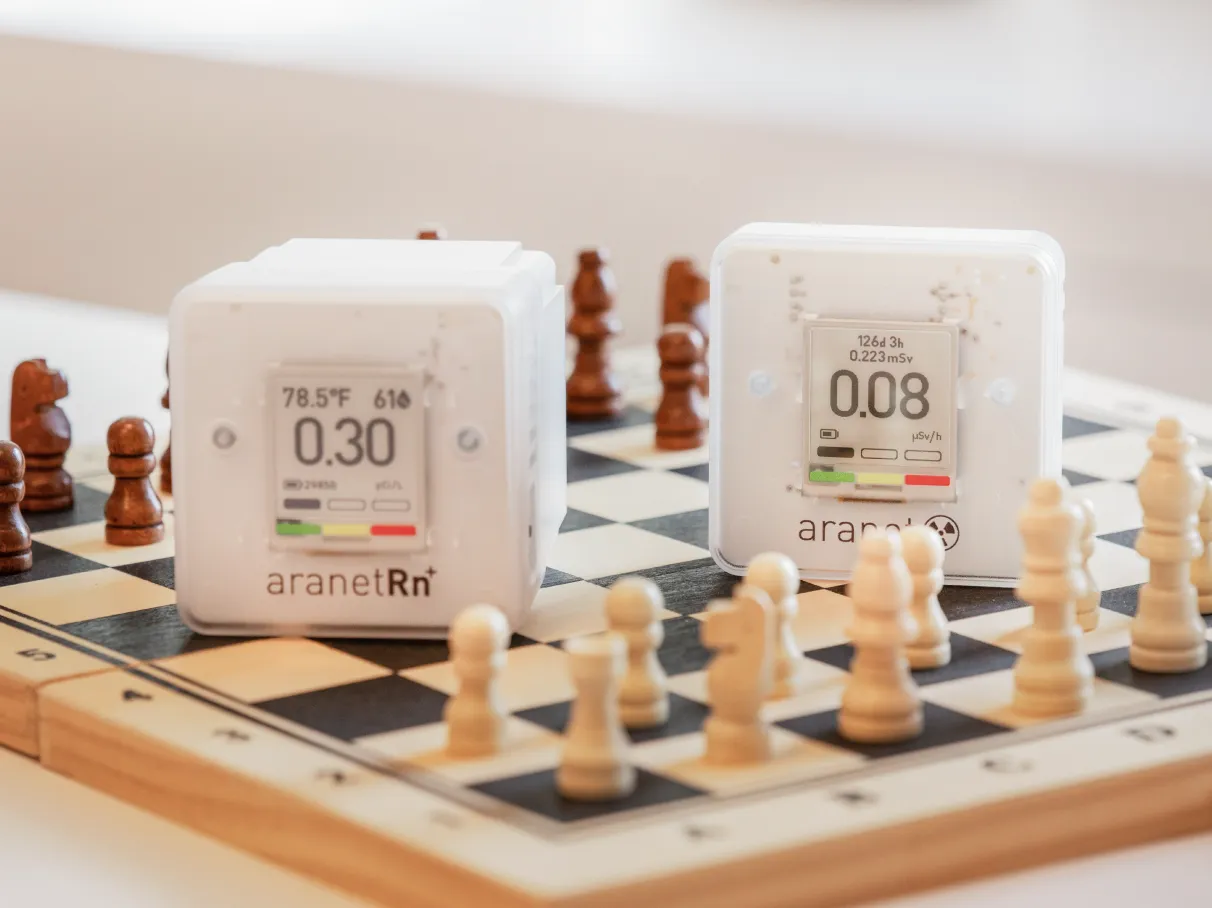
Many people ask whether the Aranet Radiation Sensor can measure radon, and the simple answer is no. Although radon is a radioactive gas, it cannot be detected by the Aranet Radiation sensor. The reason lies in the type of radiation each sensor is designed to detect. Let’s break down the science behind it!
Radon: a Unique Threat With a Unique Detection
Radon gas emits alpha particles when it decays, which is how it’s typically detected. While alpha particles can be harmful if emitted in the lungs, they can’t penetrate most materials - even a sheet of paper. Detecting radon, therefore, requires a specialized sensor like Aranet Radon Plus sensor, which is designed to measure alpha particles in real-time, providing fast and accurate readings to ensure safety. It uses an ionization chamber to detect radon, specifically to measure alpha particles.
An ionization chamber works by measuring the charge created when ionizing radiation, such as alpha particles, interacts with the gas inside the chamber. When an alpha particle is emitted into the chamber, it ionizes the surrounding air molecules, creating positive ions and free electrons. The chamber consists of a cylinder with a central electrode that attracts the positive ions, while the outer wall serves as the second electrode, attracting electrons. By measuring the electrical response - either voltage or current - generated from this process, the concentration of radon in the chamber can be determined.
Ionization chambers are commonly used in radiation safety, medical dosimetry, and environmental monitoring because they offer reliable, continuous radiation readings.
The Role of Aranet Radiation Sensor
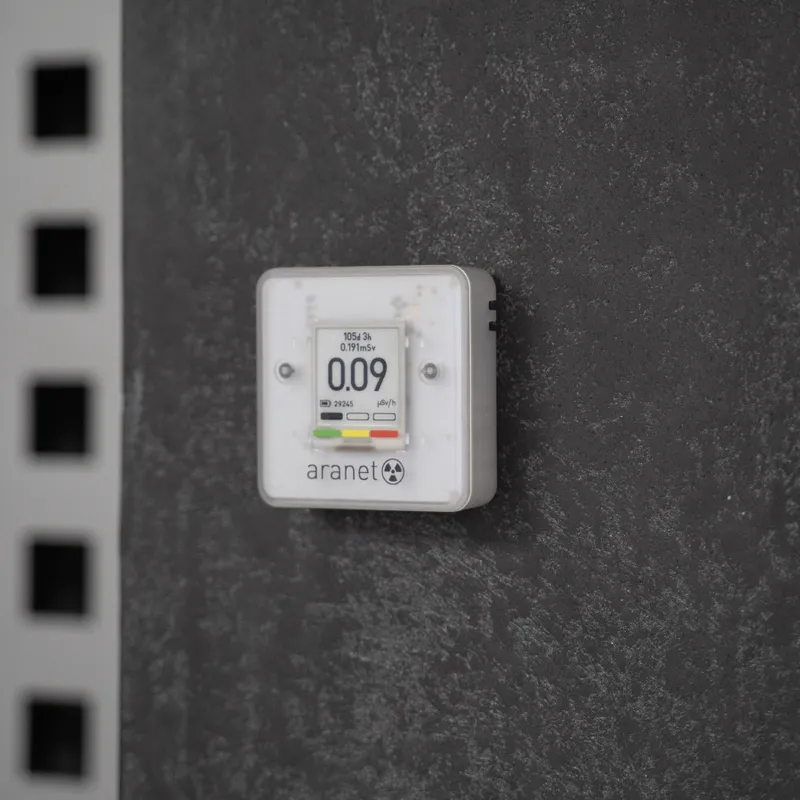
On the other hand, Aranet Radiation Sensor is designed to detect beta, gamma, and X-ray radiation with a detection range of 80 to 1500 keV. It provides continuous monitoring of radiation dose rates and total accumulated dose, making it ideal for use in environments where radiation exposure is a concern. The Aranet Radiation Sensor utilizes a PIN diode as the core component for detecting ionizing radiation. One of the materials covering the active sensing element is paper, which means the sensor cannot detect alpha radiation, making it unsuitable for radon measurement.
How Ionizing Radiation Affects Health?
To further clarify the differences and health effects of various types of ionizing radiation:
- Alpha particles: Alpha particles are a form of ionizing radiation that consists of two protons and two neutrons bound together, making them relatively large and heavy compared to other types of radiation. Due to their mass, alpha particles are slow-moving and have limited penetration power. In fact, they can be stopped by something as thin as a sheet of paper or even the outer layer of human skin.
Despite their weak penetration, alpha particles can be dangerous if ingested or inhaled. For instance, if a radioactive material emitting alpha radiation, like radon, is inhaled, it can damage the cells inside the lungs. Long-term exposure to alpha-emitting substances has been linked to an increased risk of lung cancer (Environmental Protection Agency, USA), particularly in poorly ventilated environments.
- Beta particles: Beta particles are much smaller than alpha particles, consisting of high-energy, high-speed electrons or positrons. As a result, they can penetrate further into materials, including skin and tissue, although they are still easily blocked by materials like plastic or a thin layer of metal.
The health risks from beta radiation depend largely on the exposure route. External exposure can cause burns to the skin (Center for Domestic Preparedness), while internal exposure (through ingestion or inhalation) may lead to more serious health issues such as damage to internal organs. Beta-emitting isotopes are often used in medical treatments, such as in radiotherapy for cancer patients, highlighting the dual nature of radiation as both a potential hazard and a valuable medical tool.
- Gamma: Gamma rays are a highly energetic form of electromagnetic radiation and are among the most powerful ionizing radiations. Unlike alpha and beta particles, gamma rays have no mass or charge, allowing them to penetrate deeply into materials, including human tissue. Thick, dense materials like lead or several centimeters of concrete are required to effectively block gamma radiation.
Because of their deep penetration, gamma rays are particularly dangerous if exposure is not controlled. Prolonged or high levels of exposure can damage internal organs, tissues, and DNA, potentially leading to cancer (American Cancer Society). However, gamma rays also have beneficial applications in medicine, particularly in imaging technologies like PET scans (National Library of Medicine) and in the treatment of cancerous tumors through radiotherapy.
- X-rays: X-rays, like gamma rays, are a form of electromagnetic radiation. While they have less energy than gamma rays, X-rays are still classified as ionizing radiation because they can ionize atoms and molecules, particularly at higher energy levels. X-rays are commonly used in medical imaging to create detailed pictures of the inside of the body, aiding in the diagnosis of fractures, infections, and other medical conditions.
Although the doses of X-rays used in medical settings are carefully controlled to minimize risk, prolonged or repeated exposure to X-rays can increase the likelihood of developing cancers (Cancer Research, UK) later in life. It’s why doctors and technicians often wear protective lead aprons and limit the number of X-rays taken to reduce unnecessary exposure.
Which Sensor Should You Choose?
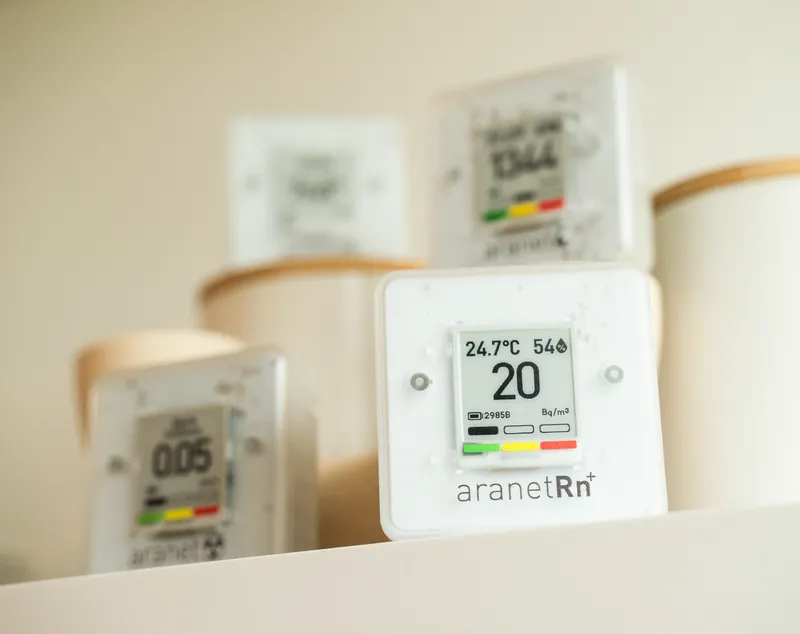
Many radiation sensors are designed to detect a variety of radiation types that might arise from environmental contamination, nuclear incidents, or industrial sources. While radon sensors focus on a specific threat within enclosed spaces, radiation sensors offer a wider scope, suitable for environments where multiple types of radiation may be present. Both sensors are critical for safety, but they address different kinds of exposure, with radon posing a significant health risk primarily in residential or enclosed settings, and radiation sensors used more broadly in industries and environmental monitoring.