United States (USA) (English / USD)

December 02, 2025
The Homeowner’s Guide to Radon
Every homeowner should know what radon is, but not everyone has time for a crash course in chemistry. What matters is simple: could your home be affected, how do you check, and what should you do if the levels are high? This guide gives you the practical basics so you can understand the risk and take confident steps to keep your home safe.
What makes radon gas dangerous?
To deal with a threat, you first need to assess it. The problem with radon gas is that we can’t detect it with our senses – it’s a colorless, odorless, and tasteless radioactive gas that forms naturally underground.
Yet the danger is real: exposure to elevated radon levels is the second leading cause of lung cancer in the US and Europe (EPA, ECAC) and the top cause of lung cancer in non-smokers in Canada (Health Canada).
The only reliable way to protect yourself and your family from the radon exposure risk is testing your home with a radon sensor – and, if levels are elevated, take the necessary steps to reduce them.
Where is radon found most often?
Since it’s released when uranium decays in soil, rock, or water, radon most often gets in the house through cracks in the foundation. It could also enter through cracks in the walls, gaps around pipes, and similar construction joints where the house meets the ground.
From there, it can accumulate to dangerous levels without us ever realizing it. This usually happens at lower levels of the building in spaces like basements or crawl spaces with limited ventilation.
Because radon distribution fluctuates, even two neighboring houses can have completely different readings. Even within one home, levels can fluctuate with weather, season, and structural changes. That’s why the EPA recommends testing all homes for radon gas. Using continuous radon sensors is the best option for the most reliable picture.
Radon One Sensor for home monitoring
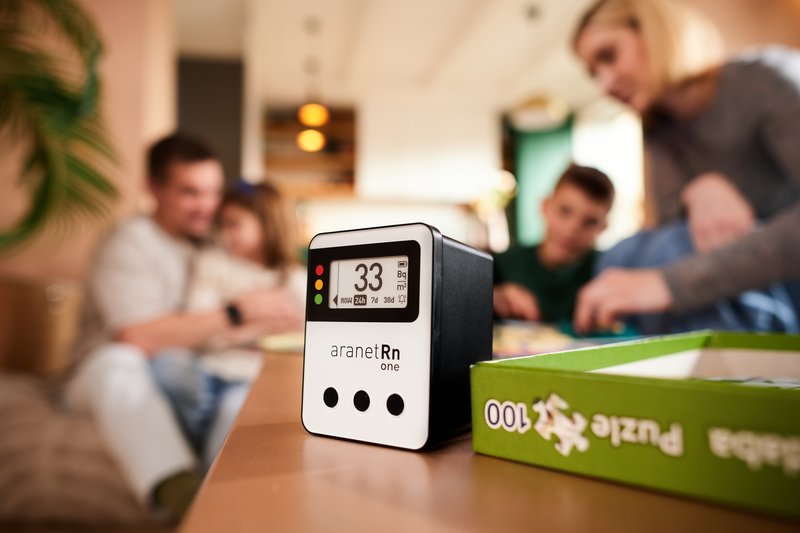
The Aranet Radon One Sensor is designed for busy people who need clear answers fast. This radon gas sensor gives you the first reliable reading in just one hour. What’s more, it’s one of the most accurate radon monitors for home use, delivering professional-grade results at a price that won’t break the bank.
It uses high-quality components and it connects to the Aranet Home app for accurate, long-term and real-time monitoring. The radon sensor works on batteries and has an E-Ink display, making it both sustainable and hassle-free. Available in four colors (white, yellow, green, and red), it blends seamlessly into any room.
All you have to do is place the radon detector on a flat surface in the lowest lived-in level – typically a basement or ground-floor room used for more than four hours a day. Keep the radon sensor away from direct sunlight and high humidity, as those can interfere with the readings.
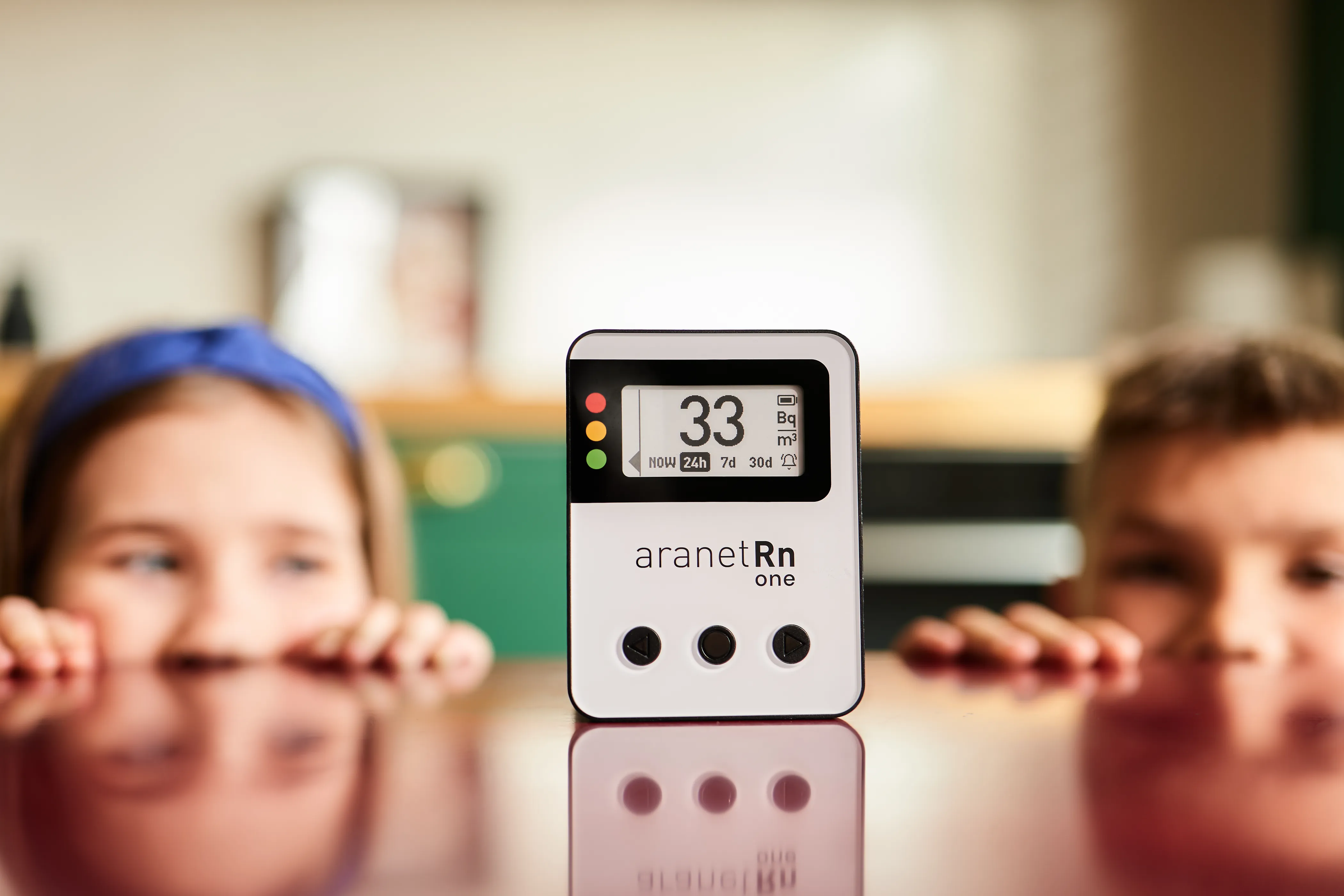
The color-coded bars (green, yellow, red) indicate the radon concentration and warn you of unhealthy levels.
According to the EPA, radon levels at home should ideally stay below 2 pCi/L (picocuries per liter) (~75 becquerels per meter cubed (Bq/m³). If that’s not immediately achievable, aim to get below 4 pCi/L (~150 Bq/m³) as a priority, but know that even levels between 2 and 4 (~75-150 Bq/m³) carry risk and should be addressed.
When and how to take action
If your radon sensor alerts you that radon levels are above 2 pCi/L (~75 Bq/m³), take action! There are several steps you can take even when levels are just approaching the potentially harmful range. Here are the main ones:
Increase ventilation: Open doors and windows for natural ventilation, use fans, or install ventilation systems in the affected areas to get rid of excess radon gas.
Seal the cracks and openings in floors, walls, and foundations, especially where the building meets the ground. This can help reduce radon gas levels but might not be enough to mitigate it entirely.
Install a radon mitigation system: EPA identifies this as the most effective long-term solution, because it vents radon-rich soil air outside before it enters your living space. This should be done by professionals and regularly maintained after setup.
Keep using a radon gas sensor to test radon levels at home. This will help you assess if the actions taken have been effective and catch new problems in time. Since radon gas levels fluctuate, long-term monitoring is safer than one-off measurements.
Consider prevention when building a new house or doing major renovations. Prevention from the outset is often more cost-effective than retrofitting mitigation, especially in radon-prone areas. Using radon-resistant building practices is key.
At Aranet, our approach is straightforward – keep it simple. measure radon. The Radon One Sensor delivers exactly that: clear, reliable monitoring that alerts you when levels rise, so you can breathe easily without worrying.
Keep it simple measure radon
Discover Radon One sensors for quick and reliable indoor air quality monitoring