India (English)
December 01, 2025
Understanding Radon Measurements: A Comprehensive Guide
Why does understanding Radon levels matter?
Radon is a naturally occurring radioactive gas that can accumulate in our homes, especially in basements and lower levels. Long-term exposure to high radon levels is a health hazard that can increase the risk of lung cancer.
In fact, the World Health Organization (WHO) estimates that radon causes 3%-14% of lung cancers worldwide. The U.S. Environmental Protection Agency (EPA) suggests taking action if radon levels exceed 4 pCi/L (148 Bq/m³).
Don’t worry - we’ll explain what these measurements mean in just a moment. The key takeaway is that regularly monitoring your home is crucial because radon levels can fluctuate due to factors like weather, ventilation, and seasonal changes.
The importance of measurement units
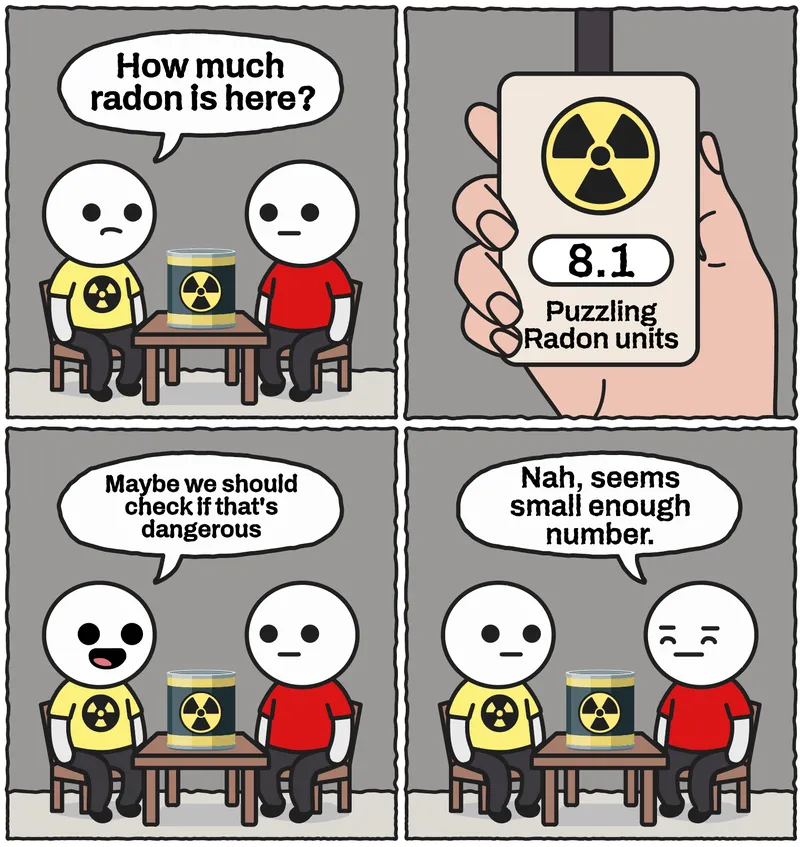
Imagine you have a cup on the table, and I tell you it weighs “2”. Without a unit, this information is pretty much useless. Is it two grams, two ounces, or two kilograms? Measurement units are crucial for making sense of data and interpreting it correctly. This is just as true for radon measurements.
Understanding Radon levels
Becquerels per cubic meter (Bq/m³)
First things first: What exactly is a becquerel, and why is it used to measure radon? This unit is named after Henri Becquerel, a sharply focused French scientist with a distinctive beard, famous for his accidental yet revolutionary discovery of radioactivity.
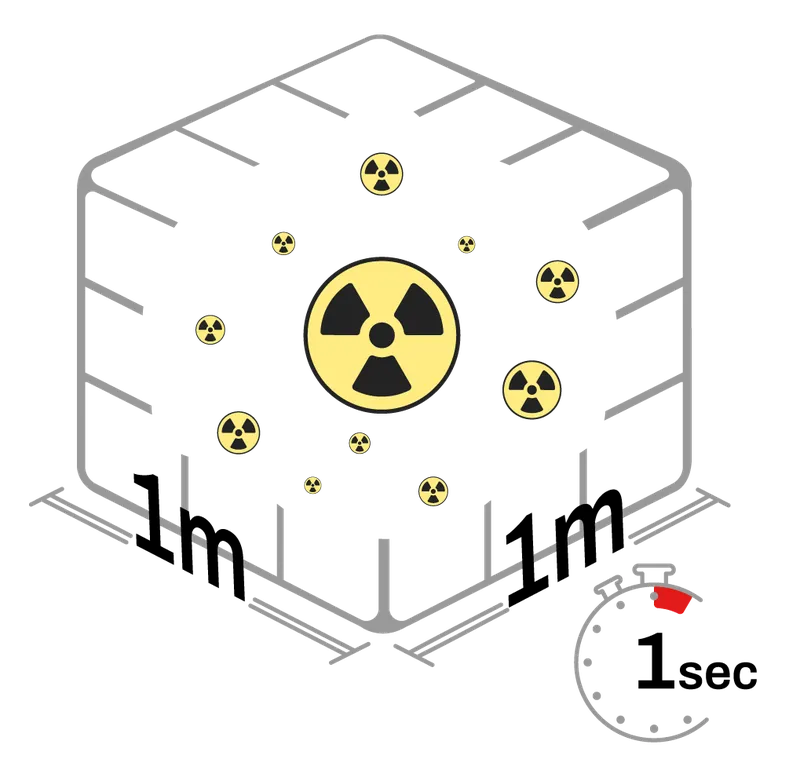
The becquerel per cubic meter (Bq/m³) is a key unit for describing radon levels. It measures the amount of radioactive decay occurring in a specific volume of air. Picture a cubic meter: a cube with each side measuring one meter. If one radon atom decays every second inside this cube, it’s recorded as 1 Bq/m³. Higher Bq/m³ levels indicate more radon decay and greater radiation exposure.
This unit is commonly used in Europe and many other regions for radon testing and mitigation.
Picocuries per liter (pCi/L)
You might also come across the term “picocuries per liter” (pCi/L), especially if you’re in the United States. So, what exactly is a picocurie, and why should it matter to you?
The term “curie” is named after Marie and Pierre Curie, the pioneering scientists known for their work on radioactivity. A picocurie is a tiny unit – just one trillionth of a curie. Think of it as a minuscule but essential piece of the measurement puzzle.
To put it in perspective, 1 pCi/L is roughly equivalent to 37 Bq/m³. Both units measure radon levels effectively, but which one you use often depends on where you are. In the US, pCi/L is more commonly used, while Bq/m³ is the standard in Europe and other regions.
Converting between Bq/m³ and pCi/L
Understanding how to switch between Bq/m³ and pCi/L is important if you’re comparing radon levels or interpreting reports. Here’s a quick reference to make conversions easy:
1 Bq/m³ = 0.027 pCi/L
1 pCi/L = 37 Bq/m³
Knowing these conversions can help you better understand radon data and ensure you’re making accurate comparisons, whether you’re looking at local reports or international standards.
Health implications and safety guidelines
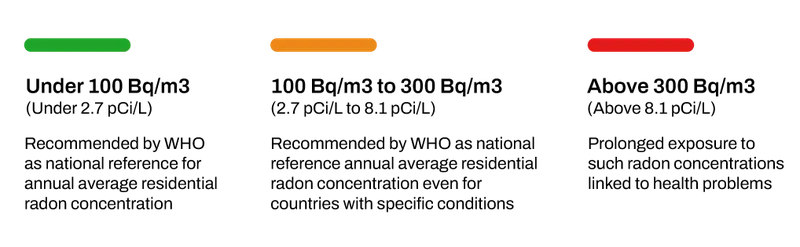
Understanding radon levels can help you ensure a living environment free of indoor air hazards. According to the WHO, outdoor radon levels typically range from 5 Bq/m³ to 15 Bq/m³ (0.14 pCi/L to 0.41 pCi/L).
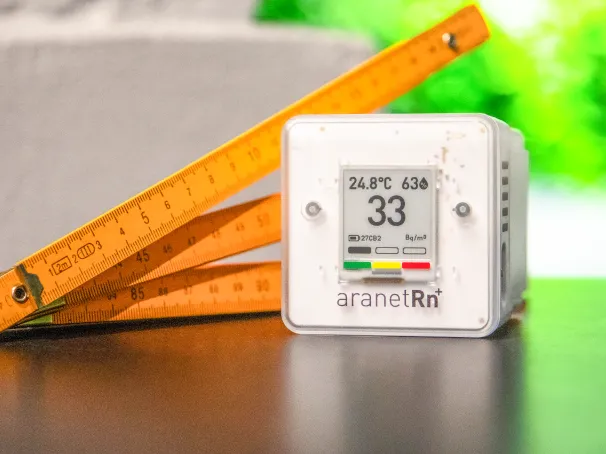
The Aranet Radon Plus sensor as well as Aranet Radon One are set to alert you based on these WHO recommendations, ensuring your home stays within safe radon levels.
Here’s our guide to interpreting radon safety levels, their potential impact on your health, and when to take action:
Levels below 2 pCi/L (74 Bq/m³)
If your radon readings are below 2 pCi/L (74 Bq/m³), you’re generally in the safe zone. While no radon level is entirely risk free, these lower levels are often found in well-ventilated spaces and pose minimal health risks. Regular monitoring is still important, as radon levels can shift over time.
Levels between 2 and 4 pCi/L (74 to 148 Bq/m³)
Radon levels in this range indicate a moderate risk. Health Canada suggests taking action if levels exceed 2 pCi/L (74 Bq/m³). Enhancing ventilation and sealing any cracks in your home’s foundation can help lower radon levels effectively.
Levels above 4 pCi/L (148 Bq/m³)
Readings above 4 pCi/L (148 Bq/m³) require prompt action. The EPA recommends installing a radon mitigation system at this level. High radon concentrations significantly increase the risk of lung cancer over extended exposure.
Levels above 10 pCi/L (370 Bq/m³)
If radon levels exceed 10 pCi/L (370 Bq/m³), you should take immediate action. At this stage, it’s crucial to consult professional radon mitigation services to implement effective solutions for reducing radon levels.
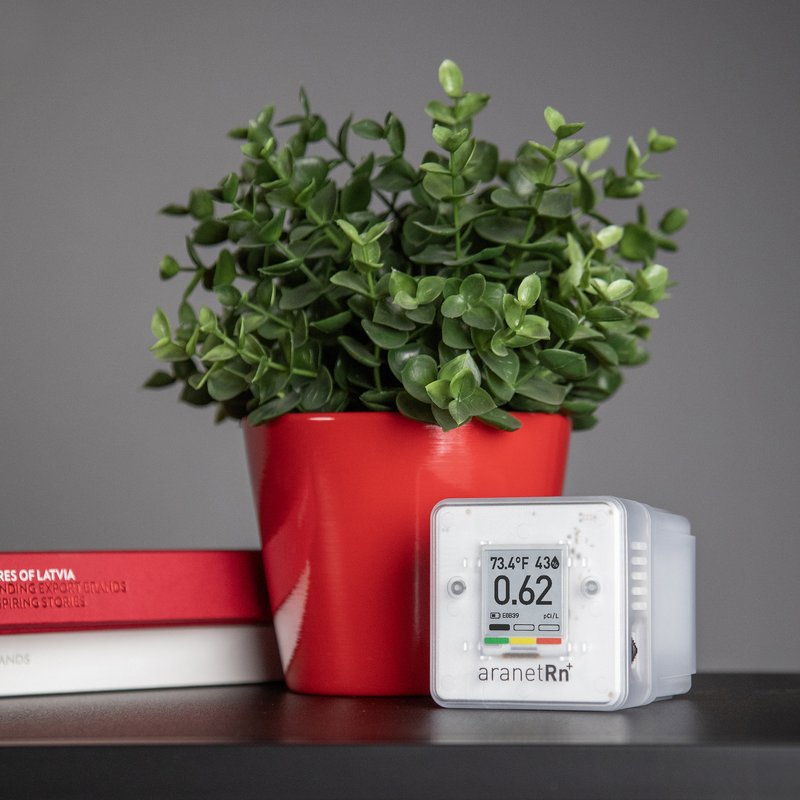
Understanding radon measurements is key to maintaining a healthy and safe home environment. By familiarizing yourself with radon detection units, you'll be better equipped to interpret radon testing data and take the necessary steps to protect yourself and your loved ones. While radon poses a serious health risk, having the right tools and knowledge can help you manage these risks effectively.
Aranet's Radon monitors offer readings in both Bq/m³ and pCi/L, making it easier to monitor your indoor air quality. Regular checks with a reliable sensor are essential for keeping your living space safe. Stay informed, stay proactive, and breathe easy knowing you're in control of your indoor air safety.