United States (USA) (English / USD)

October 28, 2024
Explainer: Why it’s still a good idea to avoid COVID (and how to do it)
One of the simplest things you can do to protect your health is to keep track of indoor air quality. Viruses spread through the air and accumulate in spaces that are poorly ventilated. By opening a window or running on an air purifier you can reduce your risks of catching an airborne virus. While viruses spread most during the winter, some viral illnesses like COVID are present all year round, and can cause serious short and long-term health issues. This post explains how monitoring and improving indoor air quality can help protect your health through all the seasons.
Viruses can spread through the air at long distances
Viruses spread through droplets and smaller particles called aerosols that are expelled by someone who has an infection. This can happen in a number of ways including coughing, sneezing, talking, or simply breathing. The highest risk of catching a virus is when you are close to the source, where there is a greater concentration of droplets and aerosols.
Viruses can also infect people from larger distances because viruses trapped in aerosols can linger in the air for hours, like cigarette smoke. When a room is poorly ventilated, aerosols accumulate, increasing your risk of catching the virus and getting sick, even if you are not standing close to someone who is infected.
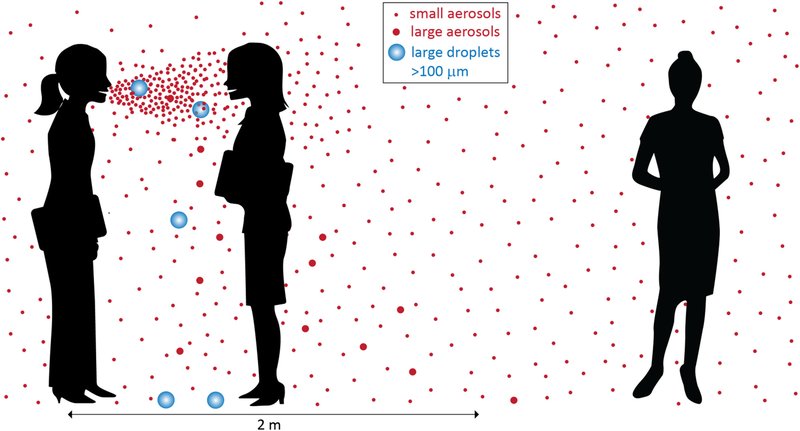
Illustration of how droplets and aerosols released during talking can transmit viruses if the person is infected. (Source: J Hosp Infect)
COVID spreads throughout the year
Many respiratory virus illnesses like the flu spread predominantly during winter, because they can survive longer in cold and dry conditions, and because people are more likely to gather inside in poorly ventilated rooms during the colder months.
However, COVID can surge throughout the year. COVID peaks occur regularly because the coronavirus that causes COVID is extremely contagious; new variants can emerge quickly; and immunity from previous infections and vaccinations decreases over time. COVID usually surges in winter and summer, however the virus can circulate at high levels at any point during the year.
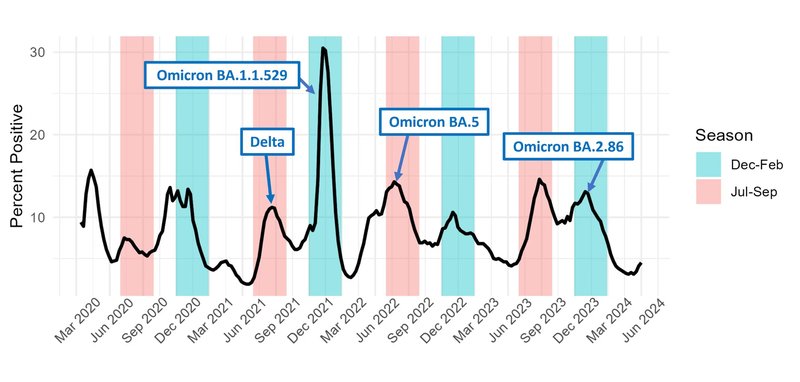
Percentage of positive SARS-CoV-2 tests reported to the CDC throughout the year (Source: CDC)
COVID still causes serious illness
While things are different than in 2020 when COVID first appeared, COVID hasn’t gone away. In many countries, COVID is still the most deadly infectious disease. And COVID infections continue to cause long-term health issues for many people. Anyone who gets COVID can develop Long COVID. Although people with severe initial infections are most likely to develop Long COVID, you can get Long COVID even after a mild initial infection.
Because coronaviruses mutate quickly, you can be reinfected with another variant as early as several weeks after you have gotten COVID. Reinfections can occur multiple times, and the more reinfections you have increases your risk of developing long-term health issues.
People with Long COVID can experience a wide variety of symptoms that can last weeks, months, or years after the initial infection. COVID can increase the risk of developing new conditions or worsen pre-existing ones including heart disease, diabetes, blood clots, neurological conditions, and chronic fatigue.
Even being sick with COVID in the short term is disruptive because most people are infectious with COVID for at least 10 days. That can mean missing days of work, family time, or an important social event.
Simple things you can do to avoid COVID
The best way of reducing your risk of developing long-term health issues from COVID is by taking a few simple steps to prevent getting COVID in the first place.
Staying up to date with the latest COVID vaccine reduces your risk of serious illness, infection, and Long COVID. Wearing a mask helps boost your own protection, protects others around you, and works against any COVID variant or other type of airborne virus.
Another effective way to reduce your risk of getting sick from airborne viruses is to improve indoor air quality.
Tracking air quality can help reduce your risk of sickness
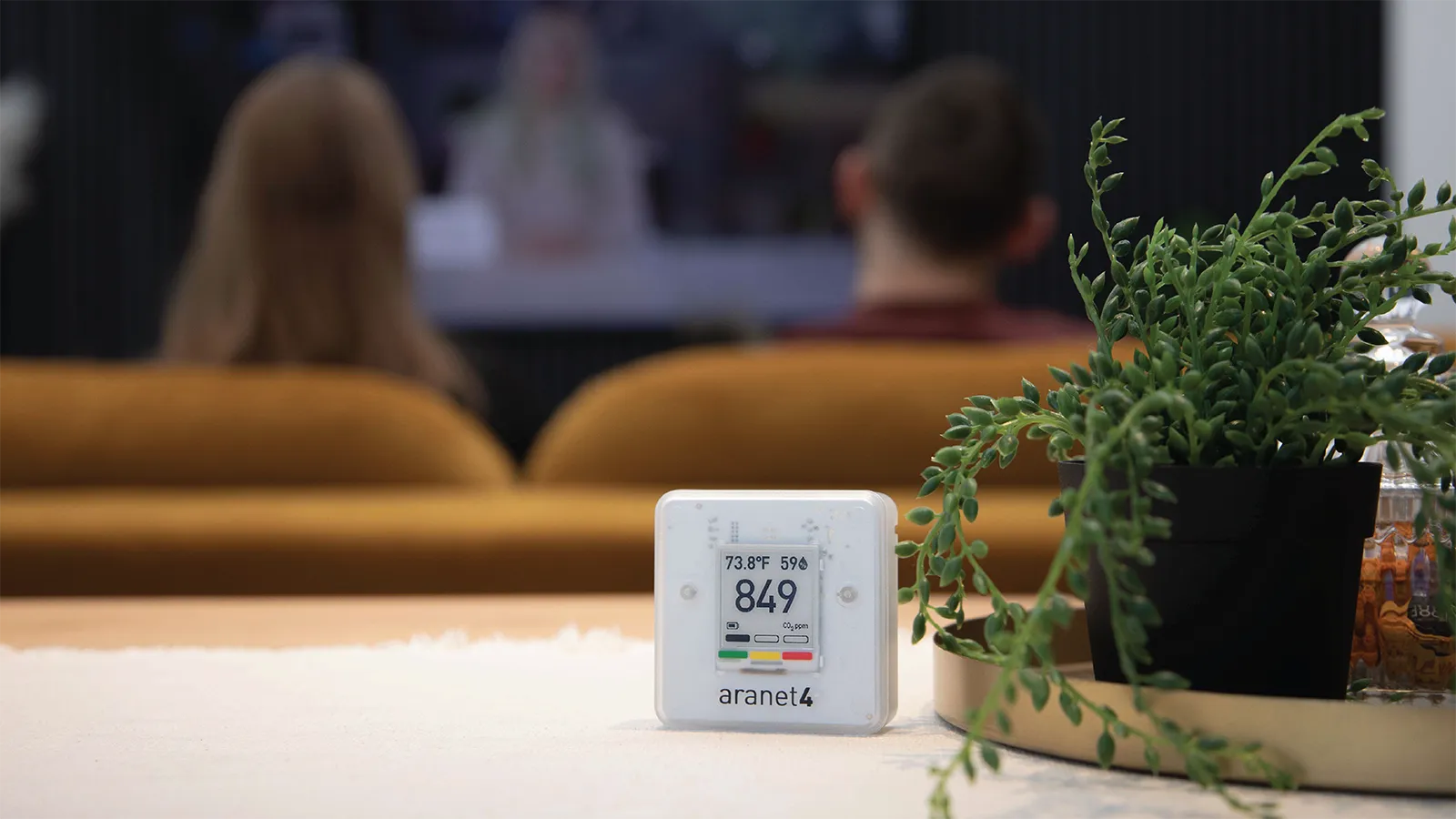
You can track air quality with a carbon dioxide monitor. When we breathe, we expel carbon dioxide molecules, which accumulate in rooms that are poorly ventilated. A high carbon dioxide reading means that you are likely breathing in a large percentage of recirculated air. If that air contains viruses, that puts you at greater risk of getting sick.
With this knowledge you can take steps to reduce your risk. This can be as easy as opening a window to allow particles with viruses to escape and fresh air to come in. If opening a window isn’t possible, HEPA purifiers or Far-UVC Light systems can help remove particles with viruses from the air.
To learn more about how carbon dioxide monitors can help reduce your risk of getting sick from viral illnesses, watch this video.
Learn more about Aranet4 HOME indoor air quality sensor here: Aranet4 HOME.
The Aranet team thanks Dr. Lucky Tran for offering insights and guidance on how to reduce the risk of COVID infection. May these revelations empower everyone to make mindful choices and foster well-ventilated environments, enriching not only our homes and shared spaces but also our overall well-being and health.
Dr. Lucky Tran
