India (English / EUR)

January 21, 2026
Best Radon Detectors for 2026 - Ultimate Buyer’s Guide
Introduction: Choosing the Right Radon Detector in 2026
A radon detector measures the concentration of radon gas in indoor air so homeowners and professionals can make informed decisions about health risk and mitigation.
Radon testing is used in three primary scenarios: continuous home monitoring, professional measurement for real estate or mitigation work, and baseline screening using passive test kits. The right device depends on whether you need long-term trend visibility, compliance-grade reporting, or a simple one-time average.
Accurate measurement matters because public health agencies do not recognize a “safe” level of radon exposure. In the United States, EPA recommends fixing a home at 4 pCi/L (≈150 Bq/m³) and considering action between 2–4 pCi/L. WHO and Health Canada publish their own reference levels in Bq/m³, reinforcing the importance of correct unit interpretation and averaging windows.
This 2026 guide ranks radon detectors using documented criteria: sensor technology, calibrated measurement range, stated accuracy conditions, time to reliable reading, data logging and connectivity model, and calibration or professional compliance signals. All specifications are verified against manufacturer datasheets and user manuals, with regulatory framing grounded in EPA, WHO, Health Canada guidance, and independent evaluations such as the Kansas State University radon chamber study.
How This List Was Created
This ranking is based on documented technical criteria, not star ratings or marketing claims.
Comparison factors:
- Sensor technology (ionization, pulsed ionization, passive diffusion, electrostatic collection)
- Stated accuracy and averaging conditions
- Calibrated measurement range
- Calibration or professional program signals (e.g., NRPP where documented)
- Connectivity, logging, and data access
Regulatory framing:
Performance is interpreted against EPA action levels (4 pCi/L), WHO reference guidance, and Health Canada benchmarks. “EPA approved” language is explicitly excluded, as no such certification exists.
Sources used:
Primary manufacturer datasheets and manuals, public health agency guidance, and independent evaluations such as the Kansas State University radon chamber study.
If a specification is not publicly documented, it is labeled as not specified rather than inferred.
What Actually Matters in a Radon Detector
Choosing a radon detector is less about brand and more about measurement physics, averaging behavior, and how results are interpreted.
Sensor Technology & Accuracy
Ionization chamber (active detection)
These detectors measure alpha decay events inside a sealed chamber and calculate radon concentration over time. They are common in continuous radon monitors (CRMs) and provide ongoing updates.
Pulsed ionization vs passive diffusion
- Pulsed ionization chambers actively sample air and can provide more frequent updates.
- Passive diffusion chambers rely on natural air exchange and typically improve confidence over longer averaging periods.
The key difference is responsiveness. Real-time monitors can show trends and spikes. Passive methods are slower but suitable for long-term averaging.
Why real-time vs delayed readings matter
Radon levels fluctuate daily and seasonally. A device that updates frequently helps identify ventilation changes or mitigation performance. Delayed or long-term-only results are better for annual exposure estimation but not troubleshooting.
Measurement Metrics
Short-term vs long-term averaging
Short-term readings (hours to days) show current conditions. Long-term measurements (>90 days) better represent annual exposure, which is what health agencies reference.
Calibration range vs display range
Some devices can display values beyond their calibrated range. Only readings within the calibrated range are covered by documented accuracy claims. This distinction matters for high-radon environments.
Environmental drift considerations
Humidity, static charge, temperature, and long-term chamber effects can influence readings. Manufacturers typically disclose accuracy conditions and averaging windows — these should always be followed.
Certifications & Standards
NRPP professional context
NRPP approval applies to specific professional measurement programs and calibration pathways. It is not a general consumer endorsement.
EPA guidance
EPA provides action levels and testing guidance but does not approve or certify specific radon devices.
WHO and Health Canada benchmarks
WHO recommends reference levels around 100 Bq/m³ where feasible, and Health Canada sets a 200 Bq/m³ guideline. Understanding regional thresholds ensures correct interpretation.
Connectivity & Data Experience
Wi-Fi vs Bluetooth vs local display
- Bluetooth devices require proximity but reduce cloud dependency.
- Wi-Fi enables remote monitoring and alerts.
- Local displays provide immediate readings without apps.
Mobile apps and logging
Historical data access is essential for identifying patterns and verifying mitigation effectiveness.
API or cloud storage
Some systems support dashboards or centralized monitoring, which may matter for facilities or multi-location deployments.
Measurement reliability first. User experience second. Both influence the right choice.
Quick Comparison Table
Item 1 of 1
Notes on Table Accuracy:
- Accuracy figures are presented with conditions, radon detectors typically define accuracy over specific averaging windows (e.g., 7 days, 30 days) and environmental conditions as documented in vendor manuals.
- EPA does not certify devices; no detector is “EPA approved.”
- NRPP signals professional calibration context, not public health endorsement.
- Detector ranges shown represent documented calibration or display capacities where published.
Item 1 of 1
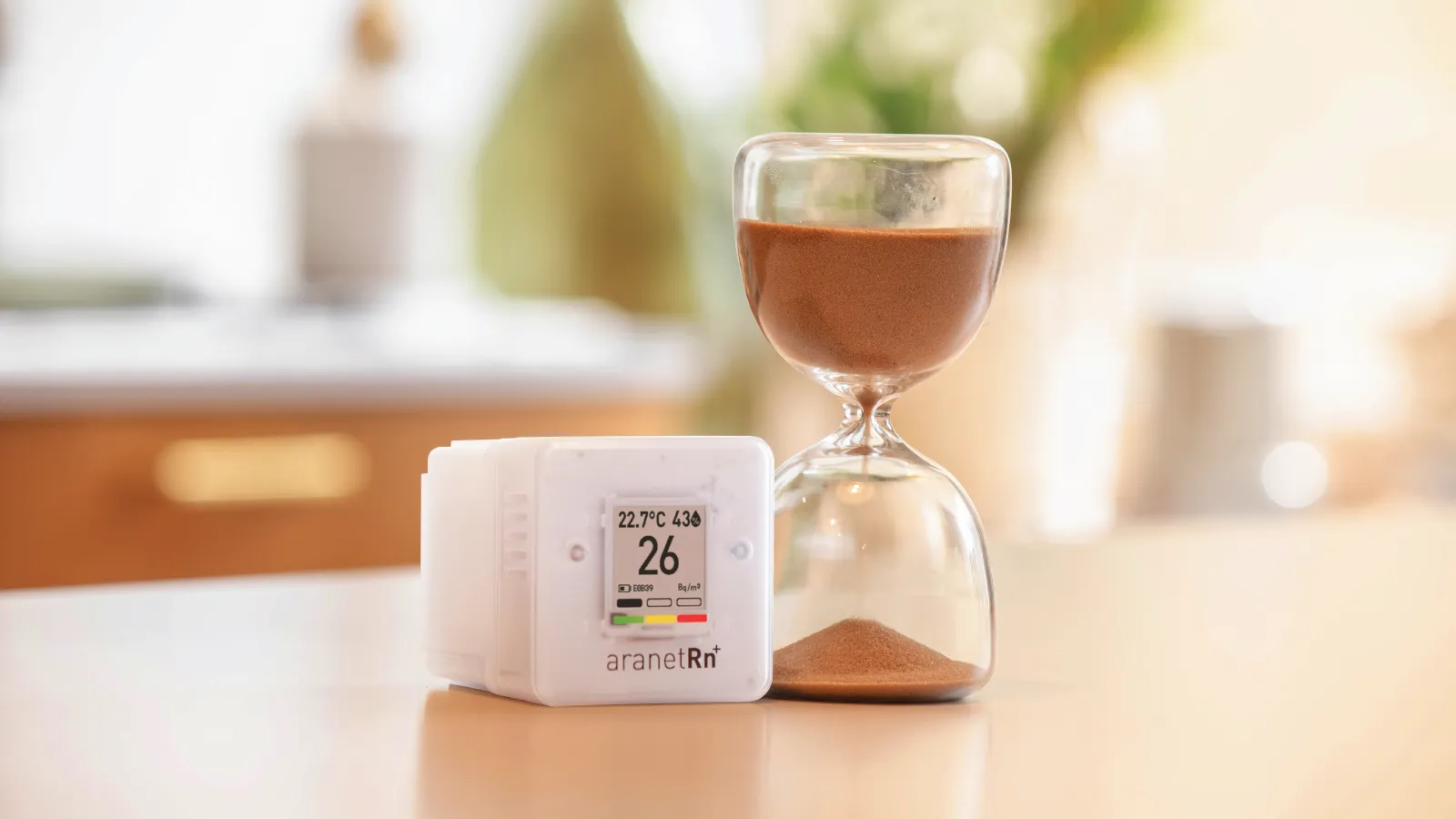
1. Aranet Radon Plus - Best Overall Radon Detector
Aranet Radon Plus is a continuous radon monitor built around an ionization chamber sensor designed for long-term residential monitoring. Unlike short-term charcoal kits or basic diffusion-based devices, it provides ongoing measurements and historical averaging, allowing homeowners to track trends rather than relying on a single test window.
Its documented ±8% accuracy (under defined 24-hour, 7-day, and 30-day averaging conditions) and wide measurement range make it suitable for both moderate and elevated radon environments. The device includes a local display for immediate readings and Bluetooth connectivity for reviewing historical data in the companion app.
What makes Aranet Radon Plus the strongest overall choice in 2026 is the balance between measurement reliability, calibrated performance transparency, and usability. It provides professional-grade sensor architecture in a residential form factor without requiring subscription services or cloud dependency.
Best suited for
- Homeowners who want continuous radon monitoring
- Long-term exposure tracking aligned with EPA / WHO guidance
- Monitoring mitigation system performance over time
Less suitable for
- One-time screening before a real estate transaction
- Users seeking the lowest-cost passive test option
- Professional inspectors requiring certified reporting workflows
Item 1 of 1
2. Airthings View Radon - Best Smart Home Radon Monitor
Airthings View Radon combines continuous radon measurement with smart connectivity, making it a strong choice for users who want both reliable readings and modern user experience. It uses a passive diffusion chamber with alpha spectrometry to measure radon and provides readings over defined averaging windows, complemented by Wi-Fi connectivity and a mobile app for remote monitoring and alerts.
What sets Airthings View Radon apart in 2026 is its balance of home usability and ongoing performance tracking. Unlike basic passive kits, this device feeds frequent measurements into an accessible dashboard where trends are easier to interpret over weeks and months. It also integrates with Wi-Fi ecosystems, allowing for cloud sync and remote notification, which is increasingly important as smart home adoption grows.
Best suited for
- Homeowners who want real-time trend insights
- Users who prefer app dashboards and remote alerts
- Smart home environments where connectivity and data access matter
Less suitable for
- Professional inspectors needing regulatory reporting workflows
- Users who need professional-grade calibration ranges
- Those who only need a one-time screening
Item 1 of 1
3. Airthings Corentium Home - Best Simple Portable Radon Monitor
Airthings Corentium Home is a portable radon detector that uses a passive diffusion chamber to measure radon levels without requiring connectivity or an app. It provides reliable averaging over standard measurement intervals and is designed for straightforward home screening without the complexity of continuous monitoring devices.
Where Aranet Radon Plus and View Radon focus on ongoing trend tracking or smart integrations, Corentium Home shines in its simplicity and standalone reliability, ideal for users who want defensible radon readings without app dependency or network setup.
Best suited for
- Homeowners needing a reliable portable radon monitor
- Situations where Wi-Fi or Bluetooth is not desirable
- Initial screening before mitigation planning
Less suitable for
- Users who want real-time trend graphs or cloud app dashboards
- Professional inspectors needing documented calibration workflows
- Long-term historical tracking beyond standard averaging periods
Item 1 of 1
4. Ecosense RadonEye RD200 - Best Fast-Response Real-Time Monitor
Ecosense RadonEye RD200 is a real-time radon detector built around a pulsed ionization chamber designed to provide frequent updates compared to passive diffusion-based devices. It delivers short-interval moving averages that make it useful for observing fluctuations caused by ventilation, HVAC adjustments, or mitigation changes.
What makes the RD200 relevant in 2026 is its emphasis on responsiveness. For users who want quicker feedback than traditional long-averaging monitors, it provides near real-time visibility without moving into professional-grade continuous radon monitor (CRM) territory. It is positioned between simple screening tools and certified professional systems.
Best suited for
- Homeowners who want faster radon trend feedback
- Monitoring short-term environmental changes
- Users who prefer a dedicated real-time display without smart-home complexity
Less suitable for
- One-time passive testing needs
- Professional inspectors requiring NRPP-certified workflows
- Users seeking Wi-Fi cloud dashboards or subscription ecosystems
Item 1 of 1
5. SunRADON XP-1 - Best for Professional Radon Testing Workflows
SunRADON XP-1 is a professional continuous radon monitor (CRM) designed for real estate transactions, certified testing, and mitigation verification. Unlike consumer monitors focused on homeowner awareness, the XP-1 is built around professional measurement protocols, including documented calibration practices and alignment with professional radon programs.
What makes the SunRADON XP-1 relevant in 2026 is its role in compliance-driven environments. It is not designed for casual monitoring but for standardized testing workflows where documentation, calibration traceability, and reporting consistency matter. For inspectors and mitigation professionals, those factors are often more important than app convenience or smart-home integration.
Best suited for
- Certified radon measurement professionals
- Real estate transaction testing
- Mitigation contractors requiring standardized reporting
Less suitable for
- Homeowners seeking simple long-term awareness
- Users wanting app-based dashboards or smart integrations
- Buyers looking for a low-cost residential monitor
Item 1 of 1
6. DURRIDGE RAD7 - Best High-Precision Professional Instrument
DURRIDGE RAD7 is a professional-grade radon instrument designed for advanced diagnostics rather than everyday home monitoring. It uses electrostatic collection and spectral analysis with a solid-state silicon detector, allowing for highly detailed radon measurement across a very wide concentration range. The device is commonly used in environmental investigations, mitigation diagnostics, and specialized testing scenarios.
What distinguishes the RAD7 in 2026 is its analytical capability. It is not simply a radon monitor, it is an instrument intended for technical users who need deeper measurement flexibility, including applications beyond standard indoor air monitoring. For experts, that precision and versatility justify its complexity.
Best suited for
- Radon professionals and environmental consultants
- Advanced diagnostic work (air, soil, or specialized investigations)
- Situations requiring wide measurement range and high instrument precision
Less suitable for
- Homeowners seeking plug-and-play simplicity
- Users wanting app-based dashboards
- Budget-conscious buyers needing routine residential monitoring
Item 1 of 1
7. Long-Term Alpha Track Test Kit - Best for Baseline Annual Exposure Screening
Long-term alpha track test kits are passive radon detectors designed to measure cumulative exposure over extended periods, typically 90 days to one year. Instead of providing real-time readings, they rely on alpha particle tracks recorded over time and analyzed by a certified laboratory after mail-in processing.
What makes alpha track kits relevant in 2026 is their suitability for estimating long-term average exposure, which aligns with how health agencies frame radon risk. For homeowners who want a baseline annual measurement, especially in jurisdictions referencing long-term averages, these kits remain a valid and recognized approach when used according to official testing protocols.
Best suited for
- Establishing long-term average radon levels
- Regulatory or compliance-style screening
- Homeowners who do not need real-time data
Less suitable for
- Monitoring short-term fluctuations
- Troubleshooting mitigation systems
- Users who want ongoing digital tracking and alerts
Common Radon Detector Buying Mistakes
Radon testing errors usually come from misunderstanding how measurement works, not from buying the “wrong brand.”
1. Confusing Short-Term Spikes With Long-Term Risk
Radon levels fluctuate daily due to ventilation, pressure changes, and weather. A short-term spike does not automatically mean mitigation is required. Health agencies base decisions on averaged exposure, not isolated hourly readings.
2. Assuming “EPA Approved” Means Certified
EPA does not approve or certify radon detectors. Devices should not be marketed as “EPA approved.” Professional measurement programs may reference calibration or NRPP context, but that is not the same as federal endorsement.
3. Ignoring Averaging Windows
Many accuracy claims apply to 24-hour, 7-day, or longer averaging periods. Instant readings can vary. Always interpret values within the documented averaging window.
4. Overlooking Calibrated Range vs Display Range
Some detectors can display readings beyond their calibrated accuracy range. Only measurements within the documented calibration range carry stated accuracy guarantees.
5. Using Passive Kits for Troubleshooting
Charcoal or alpha track kits are appropriate for screening or long-term exposure estimates. They are not suitable for diagnosing mitigation performance or short-term ventilation effects.
6. Placing the Detector Incorrectly
Radon levels vary by floor level and airflow. Devices should be placed according to manufacturer and public health guidance, typically in the lowest occupied level, away from drafts, kitchens, and bathrooms.
How to Choose the Right Radon Detector in 2026
Selecting a radon detector should be based on your monitoring goal, not just price or brand visibility.
Step 1: Define Your Purpose
- Ongoing home monitoring: Choose a continuous real-time monitor.
- Real estate transaction testing: Use a professional continuous radon monitor (CRM).
- Baseline annual exposure: Consider a long-term alpha track kit.
Your use case determines the correct device class.
Step 2: Decide Between Real-Time and Passive Testing
- Real-time monitors provide trend visibility and allow you to track changes over hours and days.
- Passive kits measure cumulative exposure over longer periods but do not provide immediate feedback.
If you plan to verify mitigation or ventilation changes, real-time monitoring is essential.
Step 3: Check Accuracy Conditions and Calibrated Range
Review:
- Stated ±% accuracy under defined averaging windows
- Calibrated measurement range
- Whether the device specifies environmental conditions for accuracy
Avoid relying on unspecified or unqualified performance claims.
Step 4: Choose Connectivity Based on Your Needs
- Local display only: Simple and independent.
- Bluetooth: App access without cloud dependency.
- Wi-Fi: Remote alerts and dashboard access.
Connectivity affects convenience — not measurement physics.
Step 5: Interpret Results Against Official Guidance
Compare readings to:
- EPA action level (4 pCi/L ≈ 150 Bq/m³)
- WHO reference guidance
- Health Canada benchmark
Focus on averaged exposure, not isolated spikes.
Choosing the right radon detector is about clarity of purpose, documented accuracy, and proper interpretation, not marketing labels.
Conclusion
The best radon detector is the one that matches your monitoring objective and provides documented, interpretable measurements, not just a number on a screen.
For most homeowners, a continuous ionization-based monitor offers the strongest balance of accuracy, transparency, and long-term trend visibility. Devices like Aranet Radon Plus stand out in 2026 because they combine calibrated performance specifications with clear averaging windows and ongoing historical tracking, making them suitable for both awareness and mitigation follow-up.
Smart-connected monitors add convenience and remote visibility. Professional CRMs serve inspection and compliance workflows. Long-term alpha track kits remain appropriate for baseline annual exposure screening.
Radon risk is defined by long-term exposure, not short-term fluctuations. Choose a detector that provides defensible measurements aligned with EPA, WHO, or Health Canada guidance, and interpret results based on documented averaging periods.
Measurement reliability first. Convenience second. Interpretation always grounded in public health thresholds.
FAQ: Radon Detectors
What is radon and why is it dangerous?
Radon is a radioactive gas produced by the natural breakdown of uranium in soil and rock. It can accumulate indoors and is the second leading cause of lung cancer after smoking, according to the U.S. EPA. Risk is based on long-term exposure, not short-term spikes.
What is the EPA action level for radon?
The EPA recommends mitigation if radon levels average 4 pCi/L (≈150 Bq/m³) or higher. It also advises considering action between 2–4 pCi/L. Other countries use Bq/m³ benchmarks, for example, WHO recommends reference levels around 100 Bq/m³ where feasible, and Health Canada sets a guideline of 200 Bq/m³.
How accurate are home radon detectors?
Accuracy depends on sensor type, averaging window, and environmental conditions. Manufacturers typically state ±% accuracy under defined timeframes (e.g., 24-hour or 7-day averages). Instant readings can vary, long-term averages are more representative of exposure risk.
What’s the difference between short-term and long-term radon testing?
- Short-term testing (2–7 days): Useful for initial screening or real estate transactions.
- Long-term testing (90+ days): Better reflects annual exposure and aligns more closely with public health risk assessment.
Continuous monitors can provide both short- and long-term averages.
Does the EPA approve radon detectors?
No. The EPA does not approve or certify specific radon devices. Claims of “EPA approved” are inaccurate. Professional measurement programs (such as NRPP-related pathways) apply to certified professionals and calibration contexts, not general consumer endorsement.
Can I use more than one radon detector?
Yes. Using two devices simultaneously can help cross-check readings, especially during mitigation or in high-radon areas. Devices should be placed according to manufacturer guidance to avoid airflow or humidity bias.
How often should a radon detector be recalibrated?
Consumer devices typically do not require user recalibration but rely on factory calibration. Professional continuous radon monitors often require annual calibration as part of certified measurement programs. Always follow the manufacturer’s documented guidance.
Editorial & Compliance Note
This guide is provided for informational purposes only and is not a substitute for professional environmental or medical advice. Radon risk assessment and mitigation decisions should be based on documented measurement practices and, where appropriate, consultation with certified radon professionals.
All technical specifications referenced in this article are based on publicly available manufacturer datasheets, user manuals, and regulatory guidance at the time of writing (2026). Accuracy figures are presented as documented by vendors and typically apply under defined averaging windows and environmental conditions. Where a specification is not publicly disclosed, it is not inferred.
The U.S. Environmental Protection Agency (EPA) does not approve or certify specific radon detectors. References to EPA, WHO, Health Canada, or NRPP are included solely for contextual interpretation of radon levels and professional measurement frameworks.
Inclusion in this list does not constitute endorsement or guarantee of performance. Actual measurement outcomes depend on placement, environmental conditions, calibration status, and adherence to manufacturer guidance.
All trademarks and product names remain the property of their respective owners.